Menu

Showing posts with label Halacha. Show all posts

Sunday, 28 December 2025

536) ‘Halachic Fiction’ and ex post facto justification in the modern Halachic process

Introduction

This article—drawing extensively on the research of Professor Marc Shapiro examines the term ‘Halachic fiction.’ It is used to describe legal constructs in Halacha (Jewish law) that are not literally true, but serve as mechanisms to reconcile the demands of Halacha with the realities of lived experience. In other words, there is a category of Halacha—popular during the post Shulchan Aruch period (from the sixteenth century to this day)—where the “community’s ritual instinct” (Halbertal 2002:166, citing Jacob Katz), as well as custom, determine the law, sometimes to a greater extent than the rabbis.   

Sunday, 30 November 2025

532) Dialogues of vision: How we view Maimonides and how he might view us (Part II)


Secrets of the Guide by Dr Micha Goodman

How Maimonides might view us

Introduction

Part I examined the reception of Maimonidean thought in rabbinic Judaism. Part II now turns the focus on its head and examines, theoretically, how Maimonides might view contemporary Judaism as we know it. 

We begin with an overview of the essence of Moreh Nevuchim (Guide for the Perplexed) in an attempt to understand what it means by ‘secrets.’ 

‘Secrets’

There are two bodies of knowledge that Maimonides describes as Maaseh Bereishit and Maaseh Merkavah, which together form the Pardes (Orchard of esoteric wisdom) into which the four sages entered (b. Chagiga 14b). This knowledge (yeda), he maintains, once existed among the prophets and sages until a tragedy occurred, and that knowledge was lost. Maimonides understands a real prophet asnot someone who experiences visionsbut rather as a composite of perfected intellect, ethics and ability to imagine (Goodman 2015:39). Maimonides believed that the greatest loss to Judaism was not the destruction of the Temple or its rituals, but the loss of knowledge. Maimonides (Introduction to Moreh Nevuchim, section 3) writes that he managed to re-establish the hidden secret that our Masoret (Tradition) had lost. He did this, not through revelation or prophecy but through the capacity of the mind. 

Sunday, 27 April 2025

508) Assessing the Modern "Yeshivishe" Approach to Torah Learning

Tractate Eruvin from the famous Vilna Shas

This Guest Post by Rabbi Boruch Clinton originally appeared on his B'chol D'rachecha site.

Despite what you might think, I’m not going to talk about the way yeshivas largely ignore Tanach or - in many cases - ignore 90 percent of whatever mesechte they’re learning. There may or may not be justifications for such deviations from tradition, but no one’s going to argue that, two thousand - or even two hundred - years ago, abandoning whole curriculum categories was the way things were supposed to work.

Instead, I’m going to discuss the dominance of the Brisker “chakira” style of analysis. I should be clear that I have nothing against the style, and I don’t deny that many people get enormous pleasure from it. My only question is whether making that our primary focus is the best use of the limited time we have available for our learning.

Sunday, 23 July 2023

438) Seeking an interface between Halacha and archaeology

Rabbi Dr Yonatan Adler at an archaeological site.
Introduction

This article, based extensively on the research by Rabbi Professor Yonatan Adler of the Institute of Archaeology at Ariel University,[1] deals with Halacha (Jewish ritual and civil law) viewed from an unusual perspective through archaeology, in addition to the written text. Of course, the legal rabbinic texts provide the indisputable and authoritative approach to the keeping of Halacha today, but our purpose here is to see to what extent archaeological evidence indicates how laws may have been observed in earlier times. It is only through this archaeological record that we can glimpse at details that are not apparent in the texts. 

Sunday, 23 April 2023

426) Developing R. Hayim Soloveitchick's view on the "controlling role of the text"


Introduction 

This article, based extensively on the research by Professor Adiel Schremer,[1] explores the rather provocative notion that contemporary religious Judaism has adopted a new approach which was unknown to previous generations. Schremer builds on the thought and observations of Rabbi Professor Hayim Soloveitchick[2] (the only son of R. Joseph Ber Soloveitchick, known as the Rav, who served as Rosh Yeshiva at Yeshiva University) who maintained this was due to an unhealthy obsession with the text - and he shows historical parallels of similar elevation of 'text above tradition' which were always reactionary to the former tradition.

Saturday, 26 November 2022

407) Nachmanides vs Rashi on the authority of Tradition

Nachmanides' commentary on the Torah

Introduction

This article, based extensively on the research by Professor Shalem Yahalom,[1] discusses the differences in interpretative style between Nachmanides (or Ramban, 1194-1270) and Rashi (1040-1105). Rashi was prepared to cite Midrashim and use them verbatim because he considered Tradition as sufficient proof of authenticity. Nachmanides, however, disputed such a claim and instead went out of his way, sometimes quite creatively, to show textual proof or bring arguments as a means of establishing authority. In his Torah commentary, Nachmanides does not merely repeat earlier exegetical (interpretative) traditions, as Rashi does with his reliance on Midrash, but rather:

“asserts the importance of analyzing all information critically” (Yahalom 2020:207).

Nachmanides begins his Torah commentary full of praise and respect for Rashi:

“In his words will I meditate, and in their love will I ravish…”

Sunday, 2 October 2022

401) Classical Sefaradic and Ashkenazic approaches to Talmud


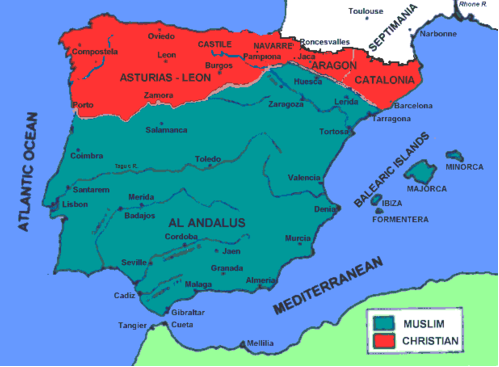
al-Andalus (Muslim Spain)

Introduction

This article is based extensively on the research by Professor Talya Fishman[1] on the differences between the classical approaches of Sefaradim and Ashkenazim to the Talmud. By ‘classical’ is meant the period prior to the thirteenth century, when there was a very distinct difference between how Sefarad (Spain) and Ashkenaz (Northern France and Germany) approached Talmud study.

Study differences between Ashkenaz and Sefarad

In Ashkenaz, the main focus of Torah study was centred primarily around Talmud study, while in North Africa and al-Andalus (Muslim-ruled Spain) they were more concerned with the study of practical Halacha as found in the locally produced eleventh-century codes of R. Nisim, R. Chananel, and R. Yitzchak Alfasi (1013–1103, ‘Alfasi’ implies ‘from Fez’, Morocco). Later in the twelfth century, the Sefaradim added the code of the Mishneh Torah by Maimonides to their study curriculum which thus continued to remain distinctly Halachic and non-Talmudic.

Sunday, 17 July 2022

391) Does morality come from religion or does religion adopt morality?


This is the position taken by advocates of the Strong Dependence Theory. This article argues that Judaism adopts the Weak Dependence Theory.

Introduction

This article, drawn extensively on the research by Professors Avi Sagi and Daniel Statman,[1]  explores the nature and provenance of Jewish morality and ethics. I found this particularly interesting because, like most rabbis, I had always thought (and taught) that morality springs from G-d. This seemed obvious. However, Sagi and Statman show that foundational rabbinic sources point to an autonomous and independent existence of morality very much defined by humans, which is then adopted by G-d as the model for Judaism.

Sunday, 22 November 2020

302) SHULCHAN HATAHOR - A ‘REAL’ CHASSIDIC SHULCHAN ARUCH:

Part of the copious writings of R. Yitzchak Safrin (1806–1874) of Zhidachov-Komarno referred to here as the "Great Eagle, the living Ari, and the G-dly Tanna."

INTRODUCTION:

I have tried to show, in a previous article Displacing Maimonides’ Mishneh Torah that whoever controls Halacha controls the future of Judaism. This is why we have a surprising number of versions of what is essentially a singular code of law and often the authors of such works were from very mystical backgrounds (see A Mystical Side to R. Yosef Karo). It seems possible that the mystics were attempting to reclaim control of the law from the early codifier, Rambam the rationalist.

In more recent times, there emerged the Shulchan Aruch haRav, by R. Shneur Zalman of Liady (1745-1812) the first rebbe of Chabad. Interestingly, this work generally steers clear of mystical references. 

Around the same time another work surfaced, Likkutei Halachot by R. Natan Sternhartz of Nemirov (1780–1845), a student of R. Nachman of Breslov, although this is more of an explanation of the ideas of his teacher than a code of law per se.

This article, based extensively on the research of Professor Ariel Evan Mayse[1], deals with a most unusual and little-known Halachic work, the Shulchan haTahor by R. Yitzchak Ayzik Yehudah Yechiel Safrin of Komarno[2] (1806–1874). The Shulchan haTahor is presented as a new code of law specifically for Chassidim. It not only alludes to, and includes Chassidic practices and ideology but it draws primarily and in the first instance from the mysticism of Chassidut and Kabbalah.

BACKGROUND TO SHULCHAN HATAHOR:

Mayse describes this fascinatingly bold and overtly Chassidic Shulchan Aruch as follows:

The book is, at heart, a systematic reformulation of Jewish law in light of Kabbalah, Hasidism, and the quest for personal mystical experience. Shulchan haTahor offers a rare case study for the interface of mystical experience, Hasidic devotional values, and kabbalistic doctrine as they explicitly shape the codified forms—and norms—of halakhah.

R. Safrin of Komarno was a prolific writer. He wrote commentaries on the Torah, Talmud and Zohar, kept a dream journal, authored a mystical autobiography and of course his new Shulchan Aruch for Chassidim. He was born into the Zhidachov Chassidic community which was known for its emphasis on strict observance of Halacha. Yet, his Shulchan haTahor was not just a mystical commentary on the Shulchan Aruch but a complete reworking of it.

Initially, his Shulchan haTahor was distributed amongst the Zhidachov-Komarno Chassidic community and remained in manuscript form. It was only published as late as 1963 almost a century after R. Safrin’s passing.

STRUCTURE:

The Shulchan haTahor follows a similar format to that of the Shulchan Aruch. It is also divided into the common simanim and se’ifim, but although presented in a seriously legalistic format, the content is very unusual.

The work contains a second section, entitled, Zer Zahav, which acts as a commentary on the first section.[3]

MIXING KABBALAH WITH HALACHA:

While R. Yosef Karo, in his Shulchan Aruch, does sometimes venture into sources from the Zohar, the general consensus is that Kabbalah must not inform Halacha. Thus, for example, R. Moshe Sofer known as the Chatam Sofer (1736–1839) writes:

“I say that one who mixes Kabbalah with legal rulings (halakhot pesuqot) is culpable as one who sows a forbidden mixture (kilayim).”[4]

Ironically, although R. Safrin showed great respect for the Chatam Sofer, he certainly did not follow this sentiment about not mixing Kabbalah and Halacha when he came to writing his Shulchan haTahor.

Mayse shows how, from a tender age, R. Safrin was drawn to the mystical teachings, particularly of the Ari Zal (1534-1572). These Lurianic Kabbalistic teachings “burned” within him “like a torch”.

Setting the tone for his Shulchan haTahor, R. Safrin nails his colours to the mast by writing:

In any case where it is impossible to reconcile the words of the Talmud with the Zohar, even though the authorities (posqim) did not say so [explicitly], the [opinions conflict] because they did not see the brilliant light of the Zohar. Had they glimpsed it, there is no doubt that they would have bowed their heads in fear and awe to its words, for they are holy! [5]

IGNORING ZOHAR IS “AN ELEMENT OF HERESY”:

According to R. Safrin, one who ignores the customs of the Zohar reveals that there must be “an element of heresy (tzad minut) hidden in such a person.”

He also claims that if one disagrees with a custom of the Zohar it is as if one disagreed with a Talmudic sage. This is probably because although the Zohar was only published around 1290,  the traditional view is that the Zohar was authored by the second-century Tanna, R. Shimon bar Yochai.

R. Safrin certainly held the mystics in the highest esteem because he continues that “one who disagrees with the ARI, disagrees with shekhinah.[6]

THE “OBLIGATION” TO IMMERSE IN A MIKVA ON EREV SHABBAT:

On the subject of immersing in a mikva, R. Safrin writes:

It is a commandment, an obligation from the teachings of our master the ARI and from the holy Zohar, to immerse oneself in the river or miqveh every Sabbath eve. One is also required to immerse in the morning before prayers on the Sabbath day, according to our master the ARI. One who transgresses his words without being compelled to do so is called a sinner, for all of his words [i.e., those of the ARI], even the most minor, were received—not from an angel or Seraph—but from the blessed Holy One Himself.[7]

DAILY MIKVE:

The Shulchan haTahor encourages one to “take care and immerse oneself each day for it purifies the life-force, spirit, and soul (nafsho, ve-ruḥo ve-nishmato).[8]

OBLIGATORY RASHI AND RABBEINU TAM TEFILLIN:

All men are obliged to follow the Ari’s “injunction” to wear two pairs of tefillin:

“[E]ach Israelite, who has some Jewishness within, is obligated by the Torah to put on two pairs of tefillin—those of RaSHI and Rabbenu Tam. One who does not wear those of Rabbenu Tam is a fool and coarse of spirit.” [9]

OPTIONAL SHIMUSHA RABBA AND RA’AVAD TEFILLIN:

In addition to Rashi and Rabbeinu Tam tefillin, there are also Shimusha Rabba and Ra’avad tefillin[10], which according to R. Safrin are not obligatory but optional for those who feel they are on a ‘higher level’:

“One whose heart has been touched by awe before God should put on the tefillin of Shimusha Rabba and the RaBad…. Only one who has maintained piety from the days of his youth (maḥazik nafsho mi-ne‘urav ba-ḥasidut) and fear of sin should do so. Thus shall he feel a wondrous light in them as well.”[11]

TEFILLIN AT MINCHA:

R. Safrin encourages “one who has attained the holy lights and vitality of the tefillin” to “wear them also at minḥah.[12]

A ‘PUNTERNIK’:

Mayse explains that in R. Safrin’s commentary on the Book of Esther, he permits tefillin strengthened with a small piece of leather called a “punternik”. The reason why it is permissible is that he saw them on the tefillin of R. Shneur Zalman of Liady, “a holy man who was punctilious and careful in all commandments.[13]      

Interestingly, Israel Berger cites an oral tradition where R. Safrin tells a student that he saw the tefillin in a dream because tradition has it that the tefillin of R. Shneur Zalman were lost. However, R. Safrin then claims that “And yet, before all the people, I did not want to write this down, and therefore I simply wrote that I saw them,[14] - even thought he only ‘saw’ them in a dream.

TEFILLIN ON CHOL HAMOED:

Regarding the strict ‘prohibition’ of wearing tefillin on the intermediate days of a festival, R. Safrin rules:

“It is forbidden to put on tefillin during the intermediate days of a festival, and one who does so is liable for two heavenly deaths.” [15]

READING FROM A DEFECTIVE TORAH:

Because the Shulchan haTahor is based on mystical practices, it often rules more stringently than normative Halacha. According to most authorities, if one reads from a Sefer Torah that was found to have a mistake, one may continue from another Sefer Torah from where one left off in the first. However, Shulchan haTahor rules that even for a minor mistake where the meaning of the word is not changed, one must start from the beginning of the weekly portion in the second Sefer Torah all over again.[16] This is because the Ari ruled like this “in his wisdom and with his holy spirit”.

In R. Safrin’s Zer Zahav commentary section, he claims that the well-known ruling of Rambam[17] – that one may even read from a defective or pasul Sefer Torah – is not just incorrect but a forgery!

The truth is more beloved to me, and I must dare to contravene my teachers. The truth is with those [who rule] that reading a pasul Torah scroll is totally meaningless, according to the Zohar, and our master the ARI.

Without a doubt, one must go back and read [the entire portion from the very beginning].[18]

INCORPORATING PRACTICES OF THE BAAL SHEM TOV:

Unusual for a Halachic work R. Safrin includes some of the practices of the Baal Shem Tov. Mayce shows how influences from dreams and visions were incorporated into the Halacha by citing the mystical autobiography of R. Safrin:

The door opened and I was worthy to see the face of our master, the BeSHT, may his merit protect us. As a result of my great joy and fear I was not able to move from my spot. He walked over to me and greeted me with a joyful face and I had great pleasure. His visage is engraved in my mind and is always before me. Perhaps I had been worthy to attain this because I had given charity that day, as is right and proper.[19]

GARTEL:

As a result of the influence of the Baal Shem Tov, the Chassidic custom to wear a gartel or prayer belt, becomes a Halachic requirement and it is prohibited to pray without one.[20]

TACHANUN:

Similarly, one must follow the Ari’s version of the Tachanun prayer and nefilat apayim which was established by the “true tzadikkim, the disciples of the BeSHT.”[21] The descent into the kelipot or husks of the nether realms becomes exemplified during the ‘descent’ in the nefilat apayim, and it is necessary to ‘fall down’ in order to free the trapped sparks contained within those lowly realms.

MAYIM ACHARONIM:

Although some authorities do regard Mayim Acharonim as a chova, or obligation, and R. Shneur Zalman of Liady calls it a mitzvah - R. Safrin cites the Baal Shem Tov’s emphasis on ensuring that the water is poured into another vessel and not onto the ground.[22]

BRANDY:

Brandy is regarded as so important and delightful that it takes Halachic precedence over some baked items known as mezonot. R. Safrin supports this notion by writing that such was the practice of R. Avraham Yehoshua of Apt as well as his uncle Tzvi Hirsch of Zhidachov.[23]

A BRACHA ON SMOKING A PIPIE:

R. Safrin writes that the Baal Shem Tov said a blessing when he smoked his pipe:

Our divine master, holy of holies, our teacher Israel ben Eliezer Ba‘al Shem Tov, recited a blessing on smoking his pipe (lulke) and on drawing the tobacco into his nose [i.e., on using snuff]. Because I do not know the formulation of this blessing, but rather simply received the tradition that he did so, my custom is not to offer a blessing.[24]

R. Safrin claims that the Baal Shem Tov received the tradition and the wording of this blessing from his teachers who are said to have been Eliyahu haNavi and Achiya haShiloni.

…But a renowned scholar can establish a blessing for himself upon smoking the pipe, and other such things. The one who blesses, shall be blessed![25]

SAFEK BERACHOT LEHAKEL:

There is a well-established[26] principle in Halacha that in a doubtful situation (say, for example, one does not remember if a blessing was recited for food), one does not recite a second blessing as it may be superfluous. (By ‘blessing’ is meant the formula Baruch atah etc.) However, Shulchan haTahor takes a very different approach to the matter and says that one should recite a blessing in cases of doubt.

R. Safrin writes that he cannot see why one should not be permitted to simply praise G-d as one does anyway throughout the day – and why does it change matters when the praise just happens to begin with the formula Baruch atah etc.?[27]

The Shulchan haTahor wites:

Each person, should arrange the blessings according to his nature and according to the hour.[28]

Regarding formulating new blessings entirely, although he does not permit the outright composing of berachot by just anyone, he does say:

Each person of Israel, if he is an expert (bar hakhi), may come up with a new blessing to offer praise for each and every one of his needs, for each and every limb. This [practice] requires great discernment.[29]

He also writes:

“Each person should act as is best for him, according to his mind and his temperament, to illuminate his soul with sublime lights” (orot tzaḥtzeḥot).[30]

THE BAAL SHEM TOV AND ASHKENAZI PIYUTIM:

The Shulchan haTahor mentions the tradition that the Baal Shem Tov did not recite the lengthy Ashkenazi piyyutim, or poems, on the High Holidays. He claimed they were a later insertion and interrupt the prayers. However, in this instance, it rules against this custom of the Baal Shem Tov and instead cites R. Elimelech of Lizhensk (1717–1787) who did recite these piyyutim because it was in accordance with the remembered practice of the Ari.[31] This way, some Chassidic recollections and oral traditions were incorporated into the Shulchan haTahor.

“WHAT ARE THE SEFARADIM TO US?”

Many Chassidim have chosen to follow the Sefaradic (Eastern) rites over those of (German) Ashkenaz. The Shulchan haTahor, however, is vehemently against this adaptation of Sefaradic rites and exhorts one not to “change anything from the Ashkenazi rite”.[32]

Whatever our master the ARI did not specifically command us to do, we should not change from the [liturgical] order of the Ashkenazim. I thunder against … certain fools who recite the [blessings following the] order of the Sephardim … what are the Sephardim to us? We are the descendants of the Ḥasidei Ashkenaz—all of our customs and the liturgy were established by those who possessed the Holy Spirit, “descenders of the chariot.”[33]

R. Safrin points out that although the Ari did indeed base himself on both Sefaradic and Ashkenazic rites, he nevertheless prayed in an Ashkenazi synagogue on the High Holidays - and the Baal Shem Tov, he says, only made a few changes to the Ashkenazi rites. [See Musings on an ‘Ashkenazi’ Arizal.]

TALKING BEFORE DAVENING:

How classical Halacha is now presented through the lens of modern Chassidut can be seen in the way R. Safrin explains the Talmudic prohibition against greeting others before the Shacharit prayer service. He writes that the progression of each day is determined based upon one’s first thoughts in the morning:

[T]he essence of Judaism—devequt and divine vitality that is showered upon (nispha‘) a person each day—is drawn from the first thought and first utterance of the morning.”[34]

KAVANAH:

The Shulchan haTahor exemplifies concentration and intention so much that it rules:

“[It is better to say the] Amidah while seated and thus settle the mind and cultivate intentionality than it is to stand while worshipping and do so without kavvanah”.[35]

THE PRACTICES OF TZADIKIM ESTABLISH THE LAW:

The Chassidic Rebbe Yisrael Friedman of Ruzhin (1796-1850) married a woman who was an isha katlanit (a married woman who had become a widow twice. Based on a Talmudic ruling[36], she should not marry again because of the fear that her third husband may also die – although today one can make a legal argument to permit such a marriage).

However, when some scholars criticised R Yisrael of Ruzhin for his actions, R. Safrin came to his defence by writing:

“the deeds of the tzaddik are firmly established law (halakhah kevu‘ah), clear as the sun…. Everything that the tzaddikim do is wholly Torah (torah sheleimah)!”[37]

Mayce writes that:

…Safrin…makes a deeper point about the power of the tzaddik to establish the halakhah—made possible because the Hasidic leader embodies the halakhah in the personhood of his charismatic self and deeds.

WHITE CLOTHES ON SHABBAT:

Mayce shows that what previously - during the time of the Ari - was a practice of the mystical elite had now become something the common people were encouraged to emulate:

“If all Israel wore white clothes on the Sabbath, the redemption would arrive … and in this bitter time, there is no arrogance (yuhara) whatsoever. ”[38]

ANALYSIS:

These types of cases are highly unusual for a Halachic code of law and they make R. Safrin’s Shulchan haTahor a most noteworthy exception to the general genre of Halachic works. Although the presentation is lively in that it does include mystical explanations and emphasises the power of individuals to make choices and he certainly does not just present a dry list of do’s and don’ts – many, even within the Chassidic community, might argue that he went too far.

Perhaps Shulchan haTahor shows how Judaism can sometimes be reformed not only by the left but also by the right. [See Reforms of the ultra-Orthodox.]

The Kotzker Rebbe, who passed away fifteen earlier than R. Safrin, said:

There will come a time when those who dress in white garb will need all the help they can get, to prevent them from turning to a distortion of Judaism.[39]


[1] Ariel Evan Mayse, Setting the Table Anew: Law and Spirit in a Nineteenth-Century Hasidic Code.

[2] For more about R. Safrin, see Hayyim Yehudah Berle, Rabbi Yitzhak Isaac miKomarno: Toldotav, Ḥiburav, Ma’amarav (Jerusalem: Mossad Harav Kook, 1965).

[3] The citations in this article are all from the Shulchan haTahor published by Avraham Aba Zis, Jerusalem 2005. Translations are by Mayse.

[4] She’elot uTeshuvot Chatam Sofer, Oracḥ Cḥaim, no. 51, 1:88.

[5] Shulchan haTahor 2:2, Zer Zahav 5.

[6] Shulchan haTahor 203:5.

[7] Shulchan haTahor 260:7. 

[8] Shulchan haTahor 88:1.

[9] Shulchan haTahor  34:1.

[10] See here for the differences between the various tefillin.

[11] Shulchan haTahor 34:5.

[12] Shulchan haTahor 25:3, 37:2.)

[13] Ketem Ofir (Jerusalem: N.p., 2012).

[14] Israel Berger, ‘Eser Qedushot (Jerusalem: N.p., 1949/50), 68.

[15] Shulchan haTahor 31:1.

[16] Shulchan haTahor 142:4.

[17] Teshuvot haRambam, ed. Yosef Blau, 2 vols. (Jerusalem: Reuven Mas, 2014), no. 294, 2:550–553.

[18] Shulḥan Tahor 142:4, Zer Zahav 2.

[19] Faierstein, Jewish Mystical Autobiographies, 279.

[20] Shulchan haTahor 91:1.

[21] Shulchan haTahor  131:3, 9.

[22] Shulchan haTahor 181:2, Zer Zahav 1.

[23] Shulchan haTahor 212:10.

[24] Shulchan haTahor 210:3, Zer Zahav 2.

[25] Shulchan haTahor 6:4, Zer Zahav 5.

[26] See the Rif on b. Berakhot 6a; Mishneh Torah, Hilchot Berachot 8:12; Shulchan Arukh, Orach Chaim 210:2 and 209:3

[27] The actual reason for this principle, however, is fascinating. Many believe it is so as not to take G-d’s name in vain. However, the real reason (as I saw in Peninei Halacha) is out of deference to the Sages who carefully instituted such blessings. Its is their rulings that we do not want to slight and has nothing to do with taking G-d’s name in vain.

[28] Shulchan haTahor 46:3.

[29] Shulchan haTahor 6:4, Zer Zahav 4.

[30] Shulchan haTahor 46:1, Zer Zahav 2.

[31] Shulchan haTahor 68:2.

[32] Shulchan haTahor 66:6.

[33] Shulchan haTahor 46:2, Zer Zahav 1.

[34] Shulchan haTahor  1:3, Zer Zahav 7.

[35] Shulchan haTahor 94:3.

[36] b. Yevamot 64b.

[37] Notzer Chesed (Jerusalem: N.p., 1982), ch. 3, no. 4.

[38] Shulchan haTahor 262:8.

[39] Amud HaEmet p. 187, par 3. Translation mine.

Sunday, 17 November 2019

251) CHASDAI CRESCAS AND HIS VISION OF A NEW HALACHIC CODE:


Many are familiar with Chasdai Crescas' work, 'Or haShem' - but his vision of a new Halachic Code is even more interesting.

INTRODUCTION:

R. Don Chasdai Crescas (1340-1410) was a philosopher and halachist from Catalonia in the north-eastern region of Spain. His teacher was Rabbeinu Nisim of Gerona, also known as the Ran, and his most well-known student was R. Yosef Albo.

In his philosophical work, Or haShem, Chasdai Crescas tries to show how Maimonides’ rationalism, a century and a half earlier,  was overly influenced by Aristotle; and he attempts to rescue Judaism from that type of rationalist Greek thought.

It is Crescas’ approach to Halacha, however, that is so fascinating because he wanted to re-evaluate and reframe the way we write our codes of law - particularly Rambam’s famous code known as Mishneh Torah. 

The purpose of this article to try and understand Chasdai Crescas’ reasoning for wanting to disrupt the popular Halachic process and replace it with a fundamentally new vision of Law.

I have drawn from the research of Professor Ari Ackerman[1], a graduate of Yeshivat Kerem beYavne who is now a professional academic.

NOTE: The Reader is reminded that this is a theoretical exploration of Chasdai Crescas’ views on Halacha, and is not intended to suggest any change to the way we conduct the Halachic process today.

CRESCAS’S UNPOPULAR VIEW ON TORAH STUDY AND CODES OF LAW:

Chasdai Crescas agreed with Rambam on two major principles:

1) Theoretical Talmud study for its own sake had no beneficial value! While this might sound strange to the modern ear - as this type of study is the staple of the modern yeshivot - it was a sentiment well established by Rambam. He claimed in his Mishneh Torah, that it was no longer necessary to study Talmud, because he had already summarised all its salient and practical points.

“In short, outside of this work [i.e., the Mishneh Torah][2] there was no need for another book to learn anything whatsoever that is required in the whole Torah, whether it be a law of the Scriptures or of the Rabbis.”[3]

In fact, in a letter to a student, Rambam went even further:

If one spends time studying commentaries [of the Talmud] and the disputes in the Talmud...  then one is wasting one’s time.”[4]

Crescas concurred.

2) Another area where Crescas agreed with Rambam was in the need for a practical Code of Law, in place of Talmudic dialectics and theoretical legal argumentation.

- But where Crescas vociferously departed ways with Rambam was in the area of the ultimate goal of Judaism: For Rambam it was the Sechel, the rationalist and philosophical mind which led to perfection; whereas for Crescas it was simply the practical fulfilment of the commandments that led to righteousness. This was why Crescas was so concerned about the importance of Codes of Law.

RAMBAM’S ‘THEORIA’ VS CRESCAS’S ‘PRAXIS’:

Because Crescas believed that the correct practice of the commandments could lead to human perfection, therefore the entire purpose of Torah study had to be practical, deed orientated and not concerned with intellectual arguments and discussion. This practical knowledge had to be clear, concise and easily accessible.[5] 

In theological terms this is known as praxis (which is defined as the process by which a theory is enacted, embodied, or realized.)

 Ackerman describes Crescas’ emphasis on praxis as follows:

“[The purpose of Torah study should be to] distil the discursive, scattered and indeterminate halakhic traditions into clear and concise legal directives, which could be widely accessed.”

By contrast Rambam placed his emphasis more in theoria, (which is defined as intellectual and rational contemplation). 

By providing a concise Code of Law to free the student from Talmudic dialectics, Rambam allowed more time for the mind to be engaged in rationalist pursuits.

This is a fascinating understanding of Rambam because according to this, he did not write his Code in order to have a Code (as one would have imagined) but he did so in order to free the mind of the student from Talmudic dialectics to allow time for more rationalist endeavours.

As Ackerman puts it:

“Maimonides and Crescas arrived at the same conclusion from antithetical premises.

Maimonides embraced comprehensive codes because he wanted to allow the scholar to devote himself to theoria.

Crescas embraced comprehensive codes because he believed that human perfection is primarily connected to praxis.”

CRESCAS BREAKS WITH THE OLD STYLE OF THE TOSAFISTS:

Because Crescas believed in the primacy of praxis and therefore in the supreme significance of the observance of the commandments, he broke from the earlier rabbinic approach, especially that of the Tosafists of Northern France and Germany who had preceded him, who valued “the creative dialectic [theoretical argumentation][6of Torah study over the adjudication of halakhah.

Although Crescas was living in Spain, the Tosafist style of study had already begun to filter down from France and Germany to Catalonia through teachers like Ramban (Nachmanides, 1194-1270).

But Ackerman explains:

“[Crescas] never attributed independent value to the study of Torah.

Consequently, in contrast to Nahmanides and his students, Crescas valued comprehensive halakhic codes, which allowed a Jew to navigate the deep and rough waters of the halakhic
sea”.


A NEW CODE TO RIVAL RAMBAM’S CODE:

In the Introduction to his theological work Or haShem, Crescas enthusiastically proclaimed his intention to write a new Code of Jewish Law in order to counter the Mishneh Torah of Rambam.

Crescas went on to severely criticise the manner in which Rambam wrote his Code.

1) He began with the fact that Rambam did not quote or reference his Talmudic sources.

2) Then he criticised the fact that Rambam did not offer alternate or differing views from the ones he presented.

3) Thirdly, and perhaps most importantly, he criticised Rambam’s omission of broad principles of Halacha and, instead, he simply laid out ‘specific legal conclusions’.

The first two criticisms of Rambam were not just peculiar to Crescas but were widespread criticisms held by many others as well.


The third criticism, however, concerning the absence of a presentation of principles of law from which a Halachic decisor could draw from in the future, was of great concern to Crescas.

THE LAW MUST NEVER BE ALLOWED TO BECOME FOSSILIZED:

By criticizing Rambam’s focus on ‘specific legal conclusions’, Crescas reveals perhaps his greatest difference from Rambam’s Code and probably from all other future Codes as well: 

In Crescas’s view, one cannot produce a Code of Jewish Law that essentially remains a book or a list of laws!

Once one does that, one intrinsically fossilizes halacha forever so that it stagnates and loses its power of relevance. 

Law must be principle based, so that future scholars will not just tick the boxes in the list, but instead, apply their minds to the fundamental Halachic axioms which must always trump the specific detailed conclusions.

For Crescas:

“[Jewish][7] Law was a boundless entity that continued to expand dynamically and infinitely,
and whose particulars could not be confined or encompassed.”

A NEW SET OF PRINCIPLES FOR HALACHIC DERIVATION:

Those familiar with the process of Torah study and analysis would know about R. Yishmael’s Thirteen Hermeneutic (defined as the methodology of biblical interpretation) Principles of Torah Interpretation.[8]

As a general rule (although in truth it’s not so simplistic), one may safely interpret the Torah based on these Thirteen Principles and arrive at an acceptable biblical interpretation. This was already well established a thousand years earlier during Talmudic (Mishnaic) times in the Baraite deRabi Yishmael around the 1st century CE.

In a most audacious move, Chasdai Crescas attempted to formulate a new set of Principles, not for biblical interpretation but rather to derive Halacha from post-biblical legal texts (i.e., Talmud and Midrash Halacha).

This set of Principles of Halachic Interpretation would be used under all circumstances and at all times in order to arrive at appropriate Halachic practice.

Thus Crescas’ new Hermeneutic Principles for Talmud Study would be used to formulate Halacha, just like R. Yishmael’s Hermeneutic Principles for Biblical Study were used for biblical interpretation.

In Crescas’s view, Rambam got it wrong by being ‘overly occupied with concrete cases’ and by presenting a book of laws which essentially fossilized those laws forever. Rather, one needed a book of fundamental Halachic Principles which would dynamically focus ‘on the theoretical grounding of the law’ and rise to meet the changing Halachic challenges of the future.

As Ackerman puts it:

“These bedrock principles of the law allowed for the derivation of new laws from the existing
laws. By grasping the principles, one encompassed the law in its entirety...

According to Crescas, by focusing on the particulars of the law, Maimonides mistakenly conceived of the law as a static system and failed to provide guidance in adjudicating new cases that resulted from the infinite nature of the Torah.

Consequently, in depicting his own code, Crescas asserted that he would compose a compilation, which contains the commandments of the Law with their causes according to the subject matter, with conception of their definitions and their general principles(ha-gedarim ve-ha-klalim).

Crescas believed that at Mount Sinai it was only the principles and not the minutiae of the Law that was revealed. This was not his unique innovation as this idea has its roots in earlier rabbinic literature.[9]  But now he wanted to consolidate those original principles in their purest form, in a new Code.

FOR TALMUDIC SCHOLARS ONLY:

Crescas’s daring scheme, however, did come with a caveat and condition that his Principles would not be subject to the whims of just anyone, but they were meant only to be interpreted by talmidei chachamim, or scholars, who were familiar with the Talmud.

PRECEDENT FROM THE RALBAG:

It’s interesting to see that Crescas’ vision of a completely different Code of Law may have been partially influenced by the French Talmudist, the Ralbag[10] (1288-1344), who passed away when Crescas was four years old.

In Ralbag’s commentary on the legal sections of the Torah, he (also) makes reference to the importance of understanding the roots of the law. In the Introduction to his commentary on the Torah, Ralbag writes:

“We will enumerate the roots (shorshei) of the laws of [each] commandment...in the most succinct form possible.”

And amazingly, Ralbag added that he (also) wanted to produce a halachic work ‘that would detail the roots of each commandment’.

Ralbag actually developed a system of 22 shorashim, or hermeneutic principles. This means that Crescas was not the first to incubate such a scheme, although he did take the matter even further by referring to an ‘infinity’ and ‘expanding’ of the Law.

CRESCAS’S ‘INFINITE’ AND ‘EXPANDING’ LAW:

The concept of infinity played a significant role in developing Crescas’ theological thinking:

“Infinity looms large in Crescass innovative philosophic, scientific, and
theological approaches.

Infinity...served the lynchpin of his halakhic philosophy.”

‘INFINITY’ AND THE KABBALISTIC INFLUENCE:

It must be remembered that one cannot discount the Kabbalistic influence on Crescas who was born 80 years after the publication of the Zohar around 1260.


No biblical or earlier rabbinic sources explicitly discuss the idea of an infinite Torah in the way Crescas does because “the notion of the infinite Torah was introduced only by the kabbalisic tradition.”

Clearly, the Zoharic influence would have helped shape his notion of Infinity which would have included an infinite Torah with infinite Halachic possibilities.

According to Ackerman:

The kabbalistic notion of the infinite Torah concerned the possibility of unlimited interpretations of the Written Torah. Thus, kabbalistic sources conceived of the infinite nature of the Torah as a hermeneutic principle that governs the exegetical possibilities of the text.

According to Crescas, the infinite nature of the Torah determined the infinitude of the law; halakhah was boundless and the particulars of Jewish law could not be confined within a finite work.”


CONCLUSION:

As we have seen, Chasdai Crescas’ bold perception of Halacha - which he based upon Ralbag and the recently surfaced Zohar - opened up other and variant avenues of possible Halachic discourse.

In his view, Halacha was no longer a stagnant list of do’s and dont’s which were forever to be memorialized in a legal compendium. Instead, Halacha was to be something organic and infinitely alive and yet still within the boundaries of Torah Judaism, as long as his set of Hermeneutic Principles were upheld.

- Unfortunately, though, Chasdai Crescas’ Halachic writings are no longer extant.  

To what extent they were put to writing in the first place, remains a mystery. But he openly shared what he was intending to write (and that’s how we know so much about his approach to Halacha), but that’s all we have; essentially his principles about his Principles.

If he did commit his Principles to writing, considering their controversial nature it is not unlikely that they may have been destroyed. If they burned Rambam’s books they surely would have burned his too.

One thing is certain though, and that is that if we ever do find his actual Halachic writings, they would make for some very interesting reading.

ANALYSIS:

Three hundred years after Chasdai Crescas, many of the new Chasidim began to teach (controversially) that if the ‘principle’ or ‘purpose’ of prayer, for example, is to cleave to G-d, then if one does not feel ready to pray at the established prayer times, one may delay the prayer in pursuit of that original principle.

Five hundred years after Chasdai Crescas, Rav Kook (1865-1935) wrote about Kavanah or intent with regard to the commandments. Normally, in rabbinic literature, Kavanah refers to concentration and focus but Rav Kook “refers to the ideal or purpose towards which the commandments point.”

In a brilliant examination of Rav Kook’s various writing on the reasons for the commandments, Professor Don Seeman writes:

 “In fact, R. Kook insists that the subordination of kavanah (intention) to maaseh (normative practice) is dependent on the moral development of the nation as a whole and may be reversed when circumstances warrant.

With respect to the Talmudic opinion that ‘mitzvoth will be nullified in the future’ (Niddah 61b), R. Kook insists that this does not mean that the commandments will be discontinued but only that the reasons for the commandments which are now secondary to practical performance will be made primary, conditioning the shape of future practice on better appreciation of their intent[11].

In some passages, he suggests that the commandments will be observed more willingly in the future, through a better-integrated (and possibly prophetic) identification with their purpose, rather than through external imposition of authority, as they are today.[12][13]

In this sense, it appears that Rav Kook took over from where  R. Don Chasdai Crescas left off.


[1] Hasdai Crescas on the Philosophic Foundation of Codification, by Ari Ackerman.
[2] Parenthesis mine.
[3] Rambam Sefer haMitzvot, 2021. (Translation from Twersky, A Maimonides Reader, 425427.)
[4] Igrot haRambam; Isaac Shalit edition, vol. 1, 312.
[5] Or haShem 2-3.
[6] Parenthesis mine.
[7] Parenthesis mine.
[8] These are often included in many prayer books during the morning services.
[9] Shemot Rabbah par. 41:6 and  Midrash Rabbah (Vilna: Ahim Rom, 1885), vol. 1, 69ab.
[10] R. Levi ben Gershon, also known as Gersonides.
[11] Pinkas haDapim1 par. 61.
[12] Linevuche haDor, ch. 8, pp. 54-55.
[13] See Evolutionary Ethics: The Ta’amei Ha-Mitzvot of Rav Kook, by Don Seeman.