Menu

Showing posts with label Babylonian Talmud. Show all posts

Sunday, 19 January 2025

498) Did the Babylonian Talmud create the authoritative rabbi and the passive Jew?


Coins from the Bar Kochba era

Introduction

This article based extensively on the research by Rabbi Dr Amir Mashiach[1] explores the emergence of the rabbinic class after the failed Jewish revolts against the Romans during the first two centuries CE. Up to that point, the rabbis did not feature in leadership positions. On assuming power immediately after the failed military campaigns and revolts, the rabbis (and the Babylonian rabbis particularly) began to intensely promote passivity as the hallmark of the Torah Jew. Too many Jews had been killed during the wars and the rabbis saw passivity as the only way forward for Jewish survival into the future. 

Sunday, 2 October 2022

401) Classical Sefaradic and Ashkenazic approaches to Talmud


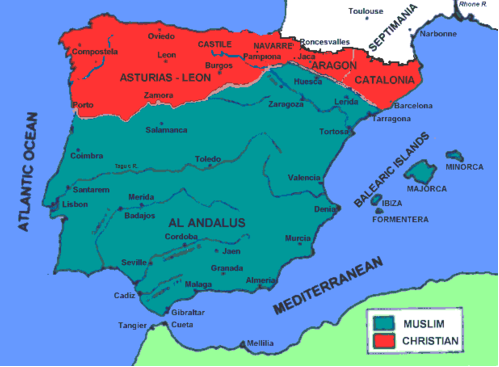
al-Andalus (Muslim Spain)

Introduction

This article is based extensively on the research by Professor Talya Fishman[1] on the differences between the classical approaches of Sefaradim and Ashkenazim to the Talmud. By ‘classical’ is meant the period prior to the thirteenth century, when there was a very distinct difference between how Sefarad (Spain) and Ashkenaz (Northern France and Germany) approached Talmud study.

Study differences between Ashkenaz and Sefarad

In Ashkenaz, the main focus of Torah study was centred primarily around Talmud study, while in North Africa and al-Andalus (Muslim-ruled Spain) they were more concerned with the study of practical Halacha as found in the locally produced eleventh-century codes of R. Nisim, R. Chananel, and R. Yitzchak Alfasi (1013–1103, ‘Alfasi’ implies ‘from Fez’, Morocco). Later in the twelfth century, the Sefaradim added the code of the Mishneh Torah by Maimonides to their study curriculum which thus continued to remain distinctly Halachic and non-Talmudic.

Sunday, 2 August 2020

288) DID THE POST-TALMUDIC STAMMAIM CONTRIBUTE TO TALMUDIC AGGADA?


INTRODUCTION:

Years ago when I was a yeshiva student, I was always upset when our teachers told us to skip over the Aggada sections on a page of Talmud. Aggada refers to the stories and narratives that are often interspersed amongst the more legal Talmudic texts.

I could never understand why they discouraged us from reading Aggada and no one could ever really explain what the issue was. 

This article, which I have based on the research of Professor Jeffrey L. Rubenstein[1], may just shed some light on the matter, although I’m not sure my teachers would have known about this.

Rubenstein suggests that the post-Talmudic Stammaim may have contributed to much of the Aggadic literature in the Talmud. They could do so because they were, in fact, the editors of the Talmud.

WHO WERE THE STAMMAIM?

The Talmudic Period was from around 200 to 450 CE. For the next century and a half, we had the Savoraic Period which was followed by the Gaonic Period from 589 to 1038.
Not much is known about the intermediate period of the Savoraim other than that they were editors of the Talmud.

Professor David Weiss Halivni specializes in that intermediate period of the Savoraim and refers to the rabbis of that period as Stammaim which more accurately describes their role as editors of the Talmud.[2] The Stammaim were mostly anonymous. He contends that the Stammaim actually wrote the Talmud (Gemara) in the final form as we know it today. 

The Stammaim would have based their deliberations on the ‘original’ Talmud compiled by the last rabbis of the Talmudic Period, Rav Ashi (d.427) and Ravina ( d. 420), which would have been a much smaller compilation than the one we are accustomed to today. It would have more resembled the style of the earlier Mishna and Tosefta, and - significantly - also without elaborate discussion and dialectics.

STAMMAIM AND AGGADA:

Rubenstein, following this thread from Halivni, has researched the notion that the Stammaim may also have been responsible for contributing to much of the Aggadic literature of the Talmud.

He writes:

“That the Stammaim took a deep interest in aggada is beyond doubt...

The fact that they included so much aggada in the Bavli [Babylonian Talmud] - a great deal more proportionately than the redactors of the Yerushalmi [Jerusalem or Palestinian Talmud]- indicates that their concerns went beyond halakha [Jewish law][3].”

Then Rubenstein asks the question around which this article pivots:

“Were they [i.e., the Stammaim][4] collectors, transmitters and commentators, or also creators[5]?

Did they substantively rework antecedent Amoraic aggadic sources and even formulate new aggadot?

Or did they transmit Amoraic traditions in substantially the same form as they received them, adding analysis and comments, but not modifying the core Amoraic tradition to any significant degree?

Rubenstein believes the Stammaim not only contributed to, but may have created some of the Aggadic content of the Babylonian Talmud!

“Indeed, since aggada has less authority than halakha, we should expect the Stammaim to have been more active in the production of aggada. They might well have felt more free to modify aggadic traditions, to rework and change Amoraic aggadic sources, given the lesser stakes involved.”

Thus, as anonymous editors, the Stammaim may have taken more latitude to include their creative contributions in the form of Aggada since they did not need to be as scrupulous in that regard as they were when it came to recording actual legal texts.

THE END OF HORA’AH (LEGAL INSTRUCTION/DEVELOPMENT):

In this context, it is relevant and interesting to note that the Talmud itself states:


“Ravina and Rav Ashi are the end of hora’a [Talmudic development and instruction]”[6]

Rav Ashi and Ravina were the last of the Talmudic Sages who instructed during the Talmudic (Gemara/Amoraic)[7] period. Because hora’a or legal development had ended, the Stammaim would have felt relatively free to engage in non-legal Aggada.

AGGADA, ARAMAIC AND DIALECTICAL STYLE:

But it wasn’t just in the sphere of Aggada that they were creative. The Stammaic[8] editors seem to have done more than merely introduce, innovate and rework Aggada, but were also instrumental in two other aspects of their presentation; enhancing the dialectical style of analysis and debate as well as a focus on Aramaic over Hebrew.

DIALECTICAL AND ANALYTICAL STYLE:

Rubenstein writes that after the period of hora’a or instruction/development had ended with Rav Ashi and Ravina, the Stammaim:

 “...continued to subject Amoraic halakhic traditions to dialectical analysis.

Thus the Stammaim, as editors, not only added to the Aggada but also introduced a more pronounced style of analytical or dialectical debate which has become the hallmark of Talmud study. As mentioned, the original Talmudic texts and traditions which the Stammaim worked on would have resembled a terser form closer to the Mishnaic style.

This is fascinating because the well-known dialectical or argumentative style that we have come to equate Talmud study with, may have been more of a contribution by the later Stammaic or Savoraic editors than the actual Amoraic participants themselves!

ARAMAIC LANGUAGE:

Furthermore, on this view, even the dominance of the Aramaic language used throughout the Gemara, may similarly have been largely the work of Stammaic editors reworking Talmudic texts that resembled the earlier Hebrew of Mishnaic and Tosefta texts! While certainly, Aramaic would have been the vernacular of Babylonian Jewry, it seems that the medium of study was still Hebrew – until the period of the Stammaim.

Rubenstein writes that from the Stammaic period we begin to see shifts:

“...from the Hebrew of Amoraic [i.e., original Talmudic] dicta to the Aramaic of the Stammaitic commentary; 

from the terse style of Amoraic dicta to the verbose, expansive style of the Stammaitic analysis; 

and from apodictic [i.e., beyond dispute][9] Amoraic pronouncements to the dialogical give-and-take of the Stammaim.”

Accordingly, the Stammaic contribution to the Talmud was extensive.

AGGADA IS OFTEN ANONYMOUS:

Our focus, however, is on the strata of Aggadic literature within the Talmud.
A common feature of Aggada is that it is often presented anonymously. If the Stammaim had drawn from earlier sources one would imagine they would have quoted the authors.[10]

A probable reason for the anonymity of the Stammaim was that once the Talmudic period of hora’a or instruction/development had officially been concluded with Rav Ashi and Ravina, it would have been audacious for the next generations of Stammaim to use their names.

This notion of anonymity is borne out by their very title ‘Stammaim’. Comparing the terms Amoraim (Talmudic Sages) and Stammaim (Editors): - Amoraim means 'those who say' (i.e., primary Talmudic sources), whereas Stammaim means 'closed, vague or unattributed sources' (i.e., anonymous and secondary sources) projected back onto the Talmud. 

TELLTALE SIGNS OF STAMMAIC EDITING:

Rubenstein[11] points out several telltale signs which may indicate Stammaic activity. 

These include:


The language used - Aramaic instead of Hebrew.
Grammatical forms of later Gaonic Aramaic as opposed to those of earlier Babylonian Aramaic.
Clumsy syntax.
Excessive length.
Repetition.
A phrase used overwhelmingly bt earlier Amoraim present in a statement of later Amoraim.
A ‘wandering’ thought process
A clustering of variant readings.               

Rubenstein also analyses the same events portrayed in other contemporaneous rabbinic texts such as the Talmud Yerushalmi and compares them with how they are presented in the Babylonian Talmud.
He writes that he compared:

“ ... source-critical evidence, namely parallel texts from Palestinian compilations, to confirm that traditions were changed in the course of time. The question then becomes, Who introduced the changes, Amoraim or Stammaim?, and these criteria point to the Stammaim.”

R. SHIMON BAR YOCHAI EMERGES FROM THE CAVE:

A simple example of telltale signs of Stammaic activity can be seen in the change of language in the following Aggadic story[12] of R. Shimon bar Yochai emerging from the cave after thirteen years:

When R. Shimon bar Yochai sees his father-in-law[13] Pinchas ben Yair, the latter expresses concern that he looks weathered from his time in the cave. Pinchas ben Yair says: “Woe is me that I have seen you like this.” And R. Shimon bar Yochai retorts: “Happy are you for seeing me like this, for had you not seen me like this you would not have found me so [learned].”

At that point, the narrative shifts from Hebrew to Aramaic and an explanatory comment is added:

“For originally when R. Shimon bar Yohai raised an objection (qushia), R. Pinhas b. Yair solved it with twelve solutions (paroqei). Subsequently when R. Pinhas b. Yair objected, R. Shimon bar Yohai solved it with twenty-four solutions.”


Although the initial narrative is in Aramaic, the exchange takes place in Hebrew and then dramatically shifts back to Aramaic and also changes from the first to the third person.
The parallel versions recorded in the Talmud Yerushalmi and other Palestinian midrashim do not contain the commentary about the twenty-four solutions. This makes it very likely that the Aramaic commentary is a Stammaic insertion.

This is an example of a Hebrew Amoraic dicta being enhanced by Aramaic Stammaic explanations and comments. However, according to the research, this is just a mild example of a commentary to, and amplification of, a text because in some instances there is evidence of total reworking of a text and also the production of new texts.

After a number of other more technical examples, Rubenstein concludes that:

“[t]he contributions [of the Stammaim][14] are quite diverse, ranging from brief editorial notes, glosses and additions to the end of an earlier narrative and interpolations from other Amoraic sources to wholesale reworkings of Amoraic narratives and the production of new aggadot.”

RABBI YAAKOV ELMAN – OVER HALF OF THE TALMUDIC TEXT IS STAMMAIC:

R. Yaakov Elman of Yeshiva University comes to the same conclusion:

 “This [Stammaic] framework, post dating the statements of identified figures [in the Talmud[15], introduces questions, often provides solutions, and, in general, controls the interpretation of the earlier sources.”[16]

But he goes much further by quantifying just how much editing the Stammaim actually did.
Elman writes that the editorial work of the Stammaim:

 “...constitutes just over half [17]of the total text of the Babylonian Talmud and...frames the discussion of the rest.”


OBSERVATION:

As mentioned in the article in the link provided above, I looked up the definition of ‘Redaction’:

Redaction is a form of editing in which multiple source texts are combined (redacted) and altered slightly[18] to make a single document.”
                     
According to the research of Rubenstein and Elman, it seems that the Stammaim have even overstepped the dictionary definition of editors and redactors, as their stylistic alterations were, to say the least, more than ‘slight’.

ANALYSIS:

The arguments of Professors Rubenstein, Halivni and Elman are fascinating and compelling. They also seem to fit into the historical notion that the Babylonian Talmud was redacted in its final form much closer to the end of the period of the Gaonim (1038) than to the end of the period of the Amoraim (450).


However, not everyone agrees with this.

Professor David Kraemer, for example, strongly supports the more mainstream view that the Babylonian Talmud was not radically reworked by its editors, the Stammaim. He argues that the Talmud intentionally leaves the conclusions of its argumentation unresolved – to teach that truth is multi-layered and the result of a conversation with many voices.

He shows that dialectics and argumentative interpretation was always used by the Talmudic rabbis (although he does agree that it became even more common and widespread towards the later generation of Amoraim). And because there was an evolution of the process of dialectical argumentation, the dialectic style could not have been an invention of the Stammaic editors (although he does agree that the final editors made some radical determinations).[19]

Contrast David Kraemer’s view with the view of David Weiss Halivni:

“The luxurious and flowing texture of the Talmud is the achievement of the Stammaim; prior to them there were only short dialogues and comments strung along the Mishna and Braithoth. The Stammaim created the sugya, a semi-independent, sustained, multi-tiered ‘give and take’. They redacted the Gemara from incomplete and truncate [i.e., short][20] traditions.”

For the inquisitive student of Talmud - who is interested in the simple matter of ascertaining when the work second in importance to the Torah was essentially written and by whom - there is still much to be clarified.


FURTHER READING:


The "Talmud of Persecution" vs "The Talmud of Exile". 

When a Yeshiva is not a Yeshiva - A Scholarly Debate.


[1]Jeffery L. Rubenstein, Criteria of Stammaitic Intervention in Aggada. See also: Jeffery L. Rubenstein, "Introduction" in Jeffrey L. Rubenstein, ed., Creation and Composition: The Contribution of the Bavli Redactors (Stammaim) to the Aggada.
[2] David Weiss Halivni has revised his previous view and now dates the Stammaic Period from 450 to 650 CE and the Savoraic Period from 650 to 750 CE.
[3] Parentheses mine.
[4] Parenthesis mine.
[5] Emphasis mine.
[6] Bava Metzia 86a.
[7] The terms Talmud, Gemara and Amora(ic) are used interchangeably.
[8] Sometimes referred to as Stammaitic.
[9] Parentheses mine.
[10] Although a Talmudic ma’aseh or uvdah may also sometimes be anonymous.
[11] Basing himself on the work of Professor Shamma Freidman.
[12] Shabbat 33b.
[13] Sefaria translates ‘chatnei’ as son-in-law, however historically, Pinchas ben Yair was the father-in-law of R. Shimon bar Yochai.
[14] Parenthesis mine.
[15] Parentheses mine.
[16] See: Yaakov Elman, “The Babylonian Talmud in its Historical Context.”
[17] Emphasis mine.
[18] Emphasis mine.
[19] See David Kraemer, The Mind of the Talmud: An Intellectual History of the Bavli (1990).
[20] Parenthesis mine.

Sunday, 26 July 2020

287) WHY DID THE TALMUDIC SAGES CONCEAL KNOWLEDGE OF JEWISH CIVIL LAW?


A Kuphar or round boat used on the Tigris and Euphrates Rivers since ancient times. (This picture is from 1914.) Was this the type of boat Rav Papa and Rav Huna were fighting over for possession during the 4th-century CE?
                           
INTRODUCTION:

Everyone knows that rabbis love teaching the Law and that the transferral of knowledge is their pre-eminent occupation.  And the Sages - particularly Babylonian Sages of the Talmudic period - would certainly have specialized in so doing during the early centuries of the Common Era.

Jacob Neusner writes in his History of the Jews in Babylonia:

“The rabbi...aspired to transform the ordinary people into ‘rabbis’. It was this aspiration that brought him into close and constant contact with the masses, forcing him to teach and to exemplify the truths he believed everyone should conform to.”[1]

In this article, I have drawn extensively[2] from Jonathan A. Pomeranz from Yale and Tel Aviv Universities, who shows that this notion of a need to transfer knowledge, was not as widespread as commonly imagined.  

We will examine some of the reasons behind the practice of Babylonian Sages to not promulgate the law - if not sometimes to actively conceal it - especially civil law.

POMERANZ CONFRONTS NEUSNER:

At first glance, Neusner’s depiction of the Sages in ‘close and constant contact with the masses’ seems fairly typical and reasonable. Rabbis have always loved to teach and still do. 

Neusner brings 'case history' as support for his seemingly benign observations. He writes:

“Rav lectured in Kimhania[3], near Sura, on how to acquire large cattle[4], and Samuel issued many dicta on the subject of acquiring fields[5], trees, and so forth.”[6]

Rav and Shmuel, two colleagues who were part of the first generation of Amoraim (Talmudic Sages from around 200 CE) are selected by Neusner as examples of Sages who lectured to the masses on various topics. 

However, Pomeranz points out that Neusner’s first example of Rav (taken from Kiddushin 25b) is one of only two instances in the Babylonian Talmud where we read about a Sage lecturing in public about civil law!


The second example of Shmuel (taken from Bava Batra 54a) is even more problematic because although he is teaching or ‘issuing dicta’, the texts begin with ‘Amar Shmuel’ (Shmuel says) which indicates that he is lecturing only to other rabbis and not to the masses!


In fact, I would add that this example is no different from any other typical Talmudic text beginning in a similar manner with ‘Amar...’ recording a legal discussion between colleagues in the study hall. There is no indication, whatsoever, in this text that Shmuel is teaching the laws of property transfer to the masses.

CIVIL LAW IS INTENTIONALLY LEFT UNPROMULGATED:

The lack of evidence that the Sages taught civil law to large portions of the populace prompts Pomeranz to point out that:

“[t]he Babylonian sages, for the most part, left civil law unpromulgated and taught it exclusively to other sages.”

[The term promulgate is defined as “to make widely known.” Unpromulgate would mean to intentionally conceal.]

The reason for this concealment of civil law from the people was pragmatic, if not strategic:

“This is, at least partially, a strategy to maintain the authority of the members of the rabbinic class in the arena of civil law...

This suggests that...instructing an audience in the content of a particular text was not the only way to achieve authority in antiquity, but that concealing textual knowledge could also be a strategy that granted interpreters of texts authority.”

According to this, matters of civil law were concealed from the people so that the Sages have total control and jurisdiction over the Jewish civil law.

THE PROBLEM:    

The problem with this strategy was that:

“...rabbinic judges could, at times, rule in ways that did not accord with the outcome that the detailed rabbinic law would seem to mandate.”

CHECKS AND BALANCES:

However, Pomeranz is quick to allay our fears of possible rabbinic abuse of authority (although, as we shall see the Talmud does record such instances) because he shows how, when  abuses did take place, the recalcitrant Sage was immediately reprimanded by the other Sages. Thus a system of legal checks and balances appears to have been in place, notwithstanding the strategy of unpromulgated civil law.

TOPICS TAUGHT IN PUBLIC LECTURES:

Professor Isaiah Gafni has examined the topics which were discussed in public lectures, known as pirka (what we today might refer to as a shiur). These public lectures were usually given on Shabbat and Festivals[7]. One category is conspicuously absent from the list of topics, and that is civil law.

According to Gafni, there are twelve recorded instances in the Babylonian Talmud where public lectures took place, but only two (including the case of Rav which Neusner brings) relate to civil law.

The Sages were only prepared to teach ritual law to some extent but they were not interested or prepared to talk to the public about civil law!

Pomeranz writes:

“[O]n the basis of this evidence, it appears that the sages generally taught topics outside the realm of civil law to the public. Civil law was, for the most part, studied only by rabbis.”

COURTROOM DRAMAS IN THE BABYLONIAN TALMUD:  

A study of courtroom dramas or narratives recorded in the Babylonian Talmud, also supports the notion that the commoner was ignorant of Jewish civil law. This gave the Sages and their relatives, an unfair advantage in court.

Two examples follow:

1) RAV NACHMAN FAVOURS HIS RELATIVE'S DAUGHTER:


The Talmud[8] describes a case where a female relative of Rav Nachman decides to sell her Ketuvah[9] to a speculator. 

Under such circumstances, the speculator takes a risk because if the woman were to die before her husband, she obviously receives no insurance payment from her Ketuvah - and the speculator loses out.

And even if the husband dies or divorces his wife, where the Ketuvah would be effective - it might only be many years later.

Because of this risk, a speculator will usually only buy a Ketuvah for a fraction of its total worth.

In our case, the husband does indeed divorce his wife who subsequently dies; so, in theory, the Ketuvah insurance should have gone to the speculator.

However, Rav Nachman makes sure that he informs his deceased relative’s daughter of a legal loophole. He tells the daughter, who is her mother’s legal heir, that she has the right to renounce her claim to the Ketuvah. Once she does that, her father (who just divorced her mother) need not pay the Ketuvah. The speculator is deceived and receives nothing, and the daughter will simply inherit the money when her father dies.

Because Rav Nachman knows civil law, he assists the daughter in tricking the speculator out of accruing any benefit from his purchase. Her mother got the money from her initial sale of the Ketuvah, the speculator gets nothing, and when her father eventually dies, his daughter will inherit the value of her mother’s original Ketuvah.

The narrative concludes with R. Nachman saying: “It’s different for an important man” because he knows the law and the speculator doesn’t.


2) ‘WHITE GEESE WHO STEAL THE CLOAKS OF ORDINARY PEOPLE’:


Then there is a similar case of deception by Sages concerning a layman, Yeimar, who lent money to a certain individual who died before he was able to repay the loan.

Yeimar sends his agent to claim and seize the deceased man’s boat. 

During the process, Rav Papa and Rav Huna approach the agent and inform him that his actions are unlawful. They explain that only the creditor himself and not his agent may seize the property of a debtor in a case where the debtor has additional debts to others.

It transpires that Rav Papa and Rav Huna were also owed money by the deceased man but they did not reveal this to the agent. As creditors, only they could seize the property and they seize the boat.

As events unfold, Rav Papa and Rav Huna begin fighting amongst themselves as to which of them has actually acquired the boat. Rav Papa rowed the boat as an act of legal acquisition while Rav Huna pulled it with a rope.

Their case comes before Rava who rebukes them for taking property from non-rabbis (including the heirs) calling Rav Papa and Rav Huna “white geese (a term referring to the white beards of the scholarly class) who steal the cloaks of ordinary men.” 

And Rava goes on to remind them of the ruling that, anyway, creditors can only claim a debt during the lifetime of the debtor.

In this narrative, it seems that Rav Papa and Rav Huna only expounded on the laws that suited them and did not reveal those that didn’t.

ORAL TRADITIONS:

The Sages also had access to lines of oral legal traditions from which they could draw from under various circumstances.

Pomeranz writes:

“The fact that the rabbis alone had access to legal traditions, then, surely enabled them to use the legal system to their own advantage.

The rabbinic decision to keep the Jewish public largely ignorant of civil law, then, was a strategy that maintained rabbinic authority and power, and could harm the legal interests of non-rabbis when they were opposed by rabbis or their relatives.”

NO ADVOCATES IN COURT:

Rabbinic courts did not have advocates. The Sages who sat in judgement had the final say and their rulings were largely unchallenged.

NUMBERS:

Pomeranz does not touch on this issue, but it is also probable that the reason why the Sages did not teach (both ritual and civil laws generally) as much as we might have imagined is simply that the numbers of academies and students during Talmudic times were not that high. 

We should not make the mistake of projecting our current numbers of yeshivot and students (which are possibly the highest in Jewish history), back onto the ancient Talmudic system. 

For example, it has been suggested that at least during the 8th–century (although post-Talmudic), the numbers of yeshiva students were only somewhere between 1 200 and 2 400 - and according to Dr Henry Abramson, those numbers are ‘considerably exaggerated’. A single large institution today would have numbers like that!


ANALYSIS:

We have clearly seen that the Sages did not generally teach civil law to the lay population.

But even more surprisingly, we have also seen that the Sages did not even teach ritual and religious law to the masses to the extent we may have expected. 

Perhaps our expectations have been predicated by what we, today, have come to regard as 'normal' activity on the part of rabbis who do love to teach the masses.

Although it does seem that the reason why civil law was largely left unpromulgated, untaught and unpublicized, was to ensure that it was only the Sages who knew how to use it. This way, they would have been able to maintain a large degree of elitism and authority.

While Pomeranz certainly agrees that the strategy to not promulgate civil law would give the Sages the advantage of great authority, he concludes that it was more to do with preventing the masses finding legal loopholes in the law which they would use to their advantage.

A mitigating reason for maintaining a rabbinic system of concealment of the law, therefore, may have been the desire to protect the law from abuse by laypeople who - if they understood the particularities and intricate details of promulgated law - could and would manipulate that law for their nefarious ends.

Pomenanz writes:

“Rabbinic authority, then, turns out to be an insufficient explanation for the rabbinic legal practice of leaving civil law largely unpromulgated...

[W]e [should not] regard the rabbis with Foucauldian[10] cynicism and assume that everything the rabbis said and did can be explained solely as an exercise in power."


Pomeranz then explains that this idea of concealing the law was not just an innovation of the Jewish Sages but was part and parcel of the general milieu and culture of the surrounding non-Jewish society in Babylonia as well: 


"The rabbinic class did maintain its authority by having an unpromulgated law, but they also followed in the footsteps of a longstanding Near Eastern tradition of unwritten law and judicial flexibility which prevented others from manipulating the legal system for their own benefit...”


In support of Pomeranz, if the Sages sometimes succumbed to this abuse of the law, the ordinary population certainly would have too, and even more liberally so.

Furthermore, it is also possible that the Sages, indeed, did not teach civil law for fear people would abuse the law with loopholes – but that was only during the early period when Jewish courts were in operation and legally effective. After that period, when the study of civil law fell under the rubric of general Torah study and Jewish civil law was largely theoretical, the rabbis would have been more open to teaching such matters because the fear of abuse of practical law was no longer relevant. 

One can also say that as long as Jewish civil law was in active use in Babylonia, authority was exercised by withholding the knowledge - whereas later, when it became theoretical, authority was exercised by those with the knowledge and language skills to expound and expose it.

Ultimately, Pomeranz presents us with two possible reasons why the Sages chose to conceal Jewish civil law from the masses – 

i) to maintain rabbinic authority, and 

ii) in keeping with the then contemporaneous Near Eastern cultural influences, to prevent abuse from the masses.

He concludes by favouring the latter over the former.

However, considering the blatant elitism (in references like "It’s different for an important man."[11] and the "white geeserabbinic class "stealing the cloaks of ordinary men" [12]) which we see in a number of Talmudic accounts - the question of whether Pomeranz (who is to be commended for his meticulous research) is justified in downplaying the Sages quest for authority.

Whether it was a combination of the Sages' quest for authority; their desire to protect the law from abuse by a legal savvy population; or simply a Near Eastern cultural heritage, will be left to the Reader to decide for him or herself.


FURTHER READING:

For other examples of apparent power-struggles, see:

Who Owned the early Kabbalah?

Why were the Teachings of Chassidei Ashkenaz so Elusive?

The Positive Role of Subjectivity within Halacha


[1] Neusner, A History of the Jews in Babylonia, 3:102.
[2] Jonathan A. Pomeranz, Concealing the Law; The Limits of Legal Promulgation Among the Rabbis of Babylonia.
[3] Pronounced ‘Kimchonya’.
[4] The legal act of acquisition (kinyan) for large cattle is ‘meshicha’ or ‘pulling’ to indicate a transferral of ownership. Usually, the mere act of picking something up is sufficient to show ownership but obviously in the case of large cattle that would be impossible.
[5] Shmuel spoke about removing trees and levelling a field as an act of legal acquisition of the field.
[6] Neusner, A History of the Jews in Babylonia, 2:264.
[7] There was also the notion of the Yarchei Kalah where two months a year were set aside for public education.
[8] Ketuvot 85b-86a.
[9] A Ketuvah is insurance a married woman receives if her husband dies or divorces her.  In common usage, a Ketuvah refers to a marriage document.
[10] Foucauldian is defined as the “discourse analysis...focusing on power relationships in society as expressed through language and practices, and based on the theories of Michel Foucault.” 
[11] In the case of Rav Nachman, 'Adam chashuv shani’.
[12] In the case of Yeimar.