Menu

Sunday, 21 August 2022

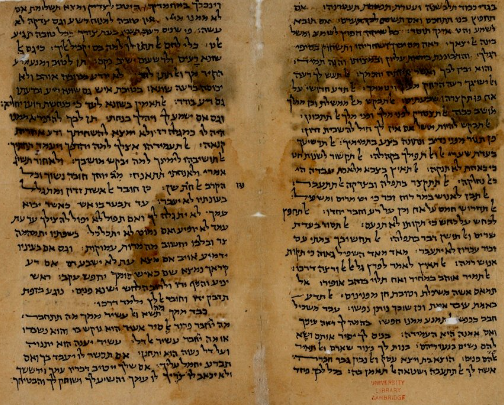
396) Which Ovadiah the Ger?


Obadiah the Norman Proselyte who entered the covenant of the God of Israel in the month of Ellul, year 1413 of Documents which is 4862 of Creation


Obadiah the Norman Proselyte and Maimonides - a Case of Non-Intersection

Guest Post by Professor Larry Zamick[1]

Introduction

I meet such interesting people through this blog. One such personality is Professor Larry Zamick, a distinguished professor of physics at Rutgers University in Piscataway, NJ. Born in Winnipeg, Canada in 1935, he attended the University of Manitoba as an undergraduate and received his PhD in nuclear physics at the Massachusetts Institute of Technology in 1962.

In his own words, Professor Zamick describes himself as “definitely not a Hebrew scholar.” However, his research and findings on the famous twelfth-century Ovadiah the Ger (Convert) contribute towards, if not change the way we understand this chapter of Jewish history. It seems that many confuse two very different Ovadiahs who were both gerim (converts). Some of the errants are distinguished scholars. The first Ovadiah was a former Christian monk born in Oppido Lucano (Southern Italy) as Johannes, the son of a Norman aristocrat named Dreux. He lived just before the second Ovadiah, a former Muslim, who is famous for interacting with Maimonides (when he inquired if, in the prayers, he was permitted to refer to Abraham as his 'father').

Sunday, 14 August 2022

395) The Alter Rebbe’s great-grandson who became a proto-Zionist and developed a form of 'natural' messianism.


Rabbi Chaim Tzvi Schneersohn

Introduction

R. Chaim Tzvi Schneerson (1834-1882) was a fourth-generation descendent of R. Shneur Zalman of Liadi, the founder of the Chabad movement (Gartner 1968:33).[1] He was known as the נין של בעל התניא, or great-grandson of the Baal haTanya.[2] Born in Lubavitch, Belarus in 1834, he emigrated to Palestine with his family in 1840 and was ordained as a rabbi at his Bar Mitzvah. Later, he taught himself English and became an important emissary and fund-raiser for Collel Chabad, which was founded in 1788 by R. Shneur Zalman, and is to this day the oldest continuously operating charity in Israel. 

During one of his fundraising trips outside of the Holy Land, R. Schneersohn became convinced that the Jews would be redeemed - not by messianic forces(!) - but instead by a series of natural and human events eventually culminating in the fulfilment of the Jewish eschatological dream of the final redemption.

Sunday, 7 August 2022

394) Berachia’s attempt to replace ‘Midrashic fantasy’ with ‘naturalistic rationalism’


Mishlei Shu’alim (“Fox Fables,” Hebrew Version Of Aesop’s Fables) By Berachia Ben Natronai HaNakdan.


Introduction

This article is based extensively on the research by Professor Tamás Visi[1] and explores the thought of Berachia ben Natronai haNakdan who lived around the twelfth and thirteenth centuries in Normandy, England and Provence (southern France). Berachia bases himself on some of the more rationalist ideas of Rav Saadia Gaon (882-942) and develops them further in his Sefer haChibur, Mussar, Sefer haMetzaref as well as his Dodi veNechdi (a work of twelfth-century scientific questions and answers, supposedly between an uncle and his nephew).[2]

Sunday, 31 July 2022

393) The travel bans of R. Yehuda heChasid

Travel by ship in the 12th century

Introduction

This article draws extensively on the research by Dr Ahuva Liberles[1] and explores a unique path within Jewish theology (and messianic eschatology) where personal redemption is emphasised, over the more common notion of national redemption. This path, it is suggested, was championed by R. Yehuda heChasid (1150-1217), a leader of the mystical group known as Chasidei Ashkenaz (or German Pietists) which flourished during the twelfth and thirteenth centuries. R. Yehuda heChasid is one of the authors of Sefer Chasidim[2] containing almost two thousand brief teachings on mystical, pietist and ascetic practices interspersed with German folk traditions. R. Yehuda heChasid’s restriction of travel is an area of scholarship that has not achieved much attention and the lacuna is filled by Liberles’ enlightening research.

Sunday, 24 July 2022

392) Causes of the Sabbatian movement: Revisiting the (unpopular) view of Gershom Scholem.


A work of Lurianic kabbalah


Introduction[1]

The Sabbatian movement, founded by the messianic claimant Shabbatai Tzvi (1626-1676) was the largest and most influential Jewish messianic movement since Christianity.[2] Shabbatai Tzvi is one of the best-documented personalities in Jewish history,[3] yet ironically both he and his movement are perhaps the least taught topics in classes on Jewish history today.[4] During the peak of the Sabbatian movement, the majority of the Jewish population believed Shabbatai Tzvi to be the final and righteous Messiah. This sentiment was endorsed by most leading and authoritative rabbis of that period, despite revisionist attempts to later hide these facts.[5] When Shabbatai Tzvi eventually apostatized to Islam, the ma’aminim or believers as his followers were known, experienced a major crisis of faith, the effects of which many maintain are still felt today. For these reasons, scholars have always been intrigued as to what exactly led the Jewish people to accept Shabbatai Tzvi as the Jewish Messiah.

Sunday, 17 July 2022

391) Does morality come from religion or does religion adopt morality?


This is the position taken by advocates of the Strong Dependence Theory. This article argues that Judaism adopts the Weak Dependence Theory.

Introduction

This article, drawn extensively on the research by Professors Avi Sagi and Daniel Statman,[1]  explores the nature and provenance of Jewish morality and ethics. I found this particularly interesting because, like most rabbis, I had always thought (and taught) that morality springs from G-d. This seemed obvious. However, Sagi and Statman show that foundational rabbinic sources point to an autonomous and independent existence of morality very much defined by humans, which is then adopted by G-d as the model for Judaism.

Sunday, 10 July 2022

390) A History of Torah Observance: The widespread rejection of Judaism is certainly tragic. But is it unusual?

Photo by Federico Di Dio photography on Unsplash

A Guest post by Rabbi Boruch Clinton


Some appear to assume that the current state of Jewish observance - where only a small minority of Jews are Torah-loyal - is an historical anomaly. The centuries and millennia preceding the European Enlightenment, so the thinking goes, saw more or less universal halachic compliance, and it was only through a combination of hostile external and internal 18th Century forces that we lost most of our population.

But I'm not sure that's true. First of all, mass defections seem to have been common through most periods of Jewish history. And second, Jewish life could hardly be considered "settled" during the early modern period (c. 1450-1800) that preceded the Enlightenment. In other words, while things may not be great right now, I'm not sure they were ever all that much better. There has always been free will and bad choices have always been an option.

Sunday, 3 July 2022

389) Morality and the question of rabbis who fled the holocaust


Introduction

This article is based extensively on the research by Isaac Hershkowitz which he conducted while preparing his PhD dissertation.[1] It deals with the morality of rabbis and Chassidic rebbes who left their communities and reached Budapest in 1943-4 just before the Nazi takeover and escaped the holocaust. Some used Aliyah certificates for Palestine despite their long-standing opposition to Zionism.

Sunday, 26 June 2022

388) The Sword of Moshe: Adjuring “אהיו פסקתיה”


Introduction

This article, based extensively on the research by Professor Yuval Harari from the Ben-Gurion University of the Negev, examines the book Charva de Moshe (Sword of Moses), one of two ancient magical works[1] to have survived from antiquity.[2] It is based on the notion that Moshe brought a sword down from heaven and is said to have used its ‘magic’ to accomplish supernatural deeds. This work gives a fascinating insight into how people believed the structure of the heavenly realms operated, and more importantly, how they could be easily manipulated by a skilful practitioner.

Sunday, 19 June 2022

387) The Apocalyptists and the rise of a supernatural Messiah

The small dagger known as a sica.

Introduction

This article is based on the research by Professor Solomon (Shneur Zalman) Zeitlin (1886-1976) considered to have been a leading authority on the Second Temple period.[1] Although a sequel to the previous article, it can be read independently. We trace the origins of the idea of a supernatural Messiah within Judaism. A supernatural Messiah is only mentioned for the first time in the late Apocalyptic literature[2] of the Second Temple period, and in the New Testament (Zeitlin 1979:103). Both these works of literature are far from normative rabbinic Judaism, so how, then, did the idea of a supernatural Messiah become so entrenched within Judaism? To answer this question, we must look to the political and spiritual conditions during and just after the Second Temple period.

Sunday, 12 June 2022

386) The difference between Mashiach then and Mashiach now.

A fragment of Ben Sira as found in the Cairo Geniza
Introduction

This article attempts to understand whether the idea of the Messiah as it originated in early biblical times, differs from its current conception. I have drawn extensively from the research by Professor Solomon (Shneur Zalman) Zeitlin (1886-1976) considered to have been a leading authority on the Second Temple period.[1]

NOTE TO READER: The Mashiach concept is always a very emotive and sensitive issue. If, like me, you were raised in the belief that Mashiach, as we understand the popularist concept today, has always been part of Judaism since time immemorial, you might find this article disquieting. I am fascinated by the robust approach of scholars (which whom I may, or may not, always agree with) to try and understand the fundamentals of our faith, history and hashkafa  - but I know this approach is not for everyone.

Monday, 6 June 2022

385) Civil Infrastructure and a Torah State


A GUEST POST BY RABBI BORUCH CLINTON 

How should a Jewish state manage the mundane tasks involved with administering daily life?

This article also appeared on the B'chol D'rachecha publication

For any complex modern society, keeping the lights on and the chaos at bay is no simple job. Imagining how the Torah would expect us to handle things is not only an interesting daydream, but a question of immediate and practical concern for many growing communities - especially in Israel.