Menu

Sunday, 18 December 2022

410) Overview and character of Frankian ideology


Jacob Frank's passing in 1791

Introduction

I have always been interested in possible areas of overlap between the three movements of Sabbatianism (under Shabbatai Tzvi), Frankism (under Jacob Frank) and Chassidism (under the Baal Shem Tov) which all emerged relatively at the same period in Jewish history. The last of these movements, the Chassidic movement, presented itself at the very zenith of the Sabbatian and Frankian storm. It is, therefore, important to understand some of this background because it is unlikely that movements suddenly emerge in a vacuum.

This article, based on previous and new research, explores the rather understudied movement known as Frankism.

Saturday, 10 December 2022

409) Polemics of Intercession

Pachad Yitzchak by R. Yitzchak Lampronti (1679-1756)

Introduction

This article, based extensively on the research by Professor David Malkiel,[1] looks at a fascinating but understudied anthology of eighteenth-century rabbinic ideas, debates and polemics between mystical and rationalist rabbis on various issues. These include intercessory prayer through the angels, appealing to the deceased, and appealing to various Divine ‘attributes.’ These debates and responsa are recorded in a section of a larger work, the Halachic encyclopedia entitled Pachad Yitzchak.[2] The seventeenth and eighteenth-century rationalist rabbis claim that the belief in these intercessional agents has its origins in non-Jewish sources, while their mystical counterparts counter-charge their interlocuters with the same offence.

Sunday, 4 December 2022

408) Rebbe Professor Isadore Twersky


The two faces of  Rabbi Professor Twersky

Introduction

This article, based extensively but not exclusively on the research by Rabbi Dr Carmi Horowitz,[1] looks at the extraordinary story of Rabbi Professor Isadore (Yitzchak) Twersky (1930-1997). As both a rebbe and professor, Isadore Twersky straddled two very distinct worlds.

The story

Rebbe Professor Twersky, as he was affectionately known, was born into a Chassidic line of rebbes from the Chernobyl dynasty. He was a great-grandson of Rabbi David of Talne, an important leader of the Chassidic movement in Ukraine during the nineteenth century. By all expectations, he should have just grown up to become another rebbe in the chain going back to R. Nachum of Chernobyl (1730-1789), a student of the Baal Shem Tov. The Talner Chassidim are a branch of the Chernobyl Chassidic dynasty.

Saturday, 26 November 2022

407) Nachmanides vs Rashi on the authority of Tradition

Nachmanides' commentary on the Torah

Introduction

This article, based extensively on the research by Professor Shalem Yahalom,[1] discusses the differences in interpretative style between Nachmanides (or Ramban, 1194-1270) and Rashi (1040-1105). Rashi was prepared to cite Midrashim and use them verbatim because he considered Tradition as sufficient proof of authenticity. Nachmanides, however, disputed such a claim and instead went out of his way, sometimes quite creatively, to show textual proof or bring arguments as a means of establishing authority. In his Torah commentary, Nachmanides does not merely repeat earlier exegetical (interpretative) traditions, as Rashi does with his reliance on Midrash, but rather:

“asserts the importance of analyzing all information critically” (Yahalom 2020:207).

Nachmanides begins his Torah commentary full of praise and respect for Rashi:

“In his words will I meditate, and in their love will I ravish…”

Sunday, 20 November 2022

406) Rashbam as Rashi’s exegetical ‘enfant terrible’?[1]


Introduction

This article, based extensively on the research by Professors Jason Kalman,[2] and Hanna Liss, deals with the commentaries of R. Shmuel ben Meir known as Rashbam (1085-1158),  Rashi’s grandson. Some of Rashbam’s commentaries on the Torah were, and to this day are still considered contentious. In a recent paper, for example, Professor Hershey Friedman writes:

“Regrettably, publishers today want to censor opinions that do not fit the mainstream way of thinking. [Ben Zion] Katz (2020, para. 1) asserts: 'Orthodox theology today is much narrower than what was acceptable in the Middle Ages.' He mentions that ArtScroll Publishing is editing and removing comments made by Rashbam that the editors believe are too radical from the new  Mikraot Gedolot.”[3]

Sunday, 13 November 2022

405) The ‘middle to upper-class’ Mishnaic rabbis.

הֶעָנִי עוֹמֵד בַּחוּץ The poor man stands outside

Introduction

This article, based extensively on the research by Professor Gregg Gardner,[1] explores issues of status, wealth and poverty in Mishnaic writing and thought. During Mishnaic times (10-210 CE), detailed discussions are developed around biblical principles concerning tithing and how sections of a field are set aside for the poor. So we know that a poor class certainly existed - but what was the socioeconomic standing of the rabbis who formulated those laws?  Were they rich or poor, or somewhere in between, and were their laws concerning the poor, perhaps informed by their own economic reality?

Sunday, 6 November 2022

404) The melamed who experienced the stirrings of the shift to Daat Torah


Signature of Moroccan born R. Chaim ben Attar, known as the Or haChaim (1696-1743)

Introduction

This article, based extensively on the work by Professor David Assaf,[1] discusses a dispute over the honour of the famed Moroccan rabbi, Chaim ben Attar (1696–1743), known as the Or haChaim after his book by that name. The Sefer Or haChaim has always been highly praised by the Baal Shem Tov (1700-1760) and his Chassidim. This, even though culturally, the Moroccan Or haChaim was far away from the nascent Chassidic movement just beginning in central Europe.

Sunday, 30 October 2022

403) Hillel Baal Shem Ra: the Master of the Evil Name.


Petrovsky-Shtern discovers the Sefer haCheshek

Introduction

Many are familiar with the Baal Shem Tov (Master of the Good name) but who was the Baal Shem Ra (Master of the Evil name)? I have drawn extensively from the research by Professor Yohanan Petrovsky-Shtern,[1] who in 1993, whilst senior librarian at the Vernadsky Library in Kiev, discovered an unusual manuscript, entitled Sefer haCheshek.

Sunday, 23 October 2022

402) Was R. Nachman’s Tikun haKelali a ‘fixing’ of Sabbatianism?


Kamanets-Podolsk

Introduction

Years ago, when I was in yeshiva, Breslov was a rather unknown Chassidic sect. Today R. Nachman (1772-1810) and his Breslov movement need no introduction as it has become one of the most popular of the Chassidic movements. I spent about fifteen years in the movement and have always been fascinated by the personality of R. Nachman. According to Professor Yehuda Liebes (1995:109),[1] when it comes to machshvet Yisrael (Jewish theology), R. Nachman is certainly one of its key personalities. However, Liebes boldly maintains that R. Nachman was - at least in his early days (Liebes 1995:109 in the Appendix) - influenced by the secretive yet powerful and widespread Sabbatian and Frankist movements of Shabbatai Tzvi (1626-1676) and particularly Jacob Frank (1726-1791) respectively.[2] Liebes suggests that in his youth, R. Nachman may have had contact with Frankists who had remained Jewish and who were plentiful in Podolia at that time. Although, Liebes continues, these influencers may have been factors, nevertheless, R. Nachman indeed produced highly individualised and unique teachings (Liebes 1995:109).

Sunday, 2 October 2022

401) Classical Sefaradic and Ashkenazic approaches to Talmud


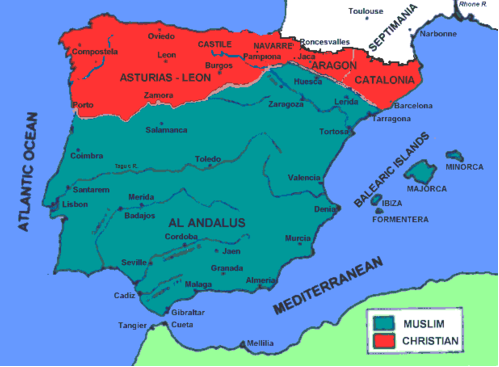
al-Andalus (Muslim Spain)

Introduction

This article is based extensively on the research by Professor Talya Fishman[1] on the differences between the classical approaches of Sefaradim and Ashkenazim to the Talmud. By ‘classical’ is meant the period prior to the thirteenth century, when there was a very distinct difference between how Sefarad (Spain) and Ashkenaz (Northern France and Germany) approached Talmud study.

Study differences between Ashkenaz and Sefarad

In Ashkenaz, the main focus of Torah study was centred primarily around Talmud study, while in North Africa and al-Andalus (Muslim-ruled Spain) they were more concerned with the study of practical Halacha as found in the locally produced eleventh-century codes of R. Nisim, R. Chananel, and R. Yitzchak Alfasi (1013–1103, ‘Alfasi’ implies ‘from Fez’, Morocco). Later in the twelfth century, the Sefaradim added the code of the Mishneh Torah by Maimonides to their study curriculum which thus continued to remain distinctly Halachic and non-Talmudic.

Sunday, 18 September 2022

400) Was it forbidden to write down the Oral Tradition?


Introduction

This article, based extensively on the work by Professor Yair Furstenberg,[1] explores the very notion of the well-known ban against writing down the Oral Tradition. It is generally accepted that rabbinic literature essentially remained in an oral form since Sinai; and that only from around the period of the redaction of the Mishna in 210 CE was it finally permitted to be written down for the first time.

However, Furstenberg writes in his Abstract that:

“multiple Talmudic anecdotes point to a complex reality that does not align with what seems as an explicit prohibition.” 

To resolve this complexity, Furstenberg suggests that we need to understand that two distinct “book cultures” existed between the rabbis of Palestine and Babylonia at that time.

Sunday, 11 September 2022

399) Why Did Ramchal Write Mesilas Yesharim?


A Guest Post by Rabbi Boruch Clinton 

Mesilas Yesharim: Perhaps it really is nothing more than a magnificent guide to Torah perfection

No one who’s spent serious time learning Rabbi Moshe Chaim Luzzato (Ramchal)’s ethical masterpiece Mesilas Yesharim can walk away uninspired. It’s possible to return to sin after being confronted with Ramchal’s powerful arguments, but it won’t be easy.

There’s no doubt that Ramchal gave the world his Mesilas Yesharim out of a genuine desire to have a positive impact. But what was the precise impact he hoped for? A simple reading of the book suggests it’s nothing more than a guide to perfecting our observance of the Torah’s timeless principles. But some claim the book was also designed to subtly introduce esoteric kabbalistic ideas into mainstream Jewish culture.